



Rabbit Road Strategy Framework: Analytical Approach to Volatility Management in Australia 2026
Provider:
InOut Games
Type:
Crash
Volatility:
High
RTP:
98%
Minimum Bet:
0.01
Maximum Bet:
5000
Autoplay:
No
Release Date:
09.09.2025
No strategy applied to Rabbit Road can alter the game's underlying RTP of 95.5% or change the probability distribution governing the Farmer / Stop Event. This is not a qualification — it is the foundational principle on which any rational session strategy must be constructed. The game operates on a certified Provably Fair random number generator in which each round's termination point is determined prior to play commencement. What strategy can accomplish is systematic risk management: controlling stake size, difficulty selection, and cash-out behaviour to extend session longevity, reduce variance exposure, and protect positive outcomes when they occur. This guide sets out four evidence-based cash-out frameworks, a bankroll allocation protocol, a cognitive bias mitigation reference, and a diagnostic checklist of common strategic errors. It is written for Australian players who want a structured analytical approach to Rabbit Road sessions rather than emotional decision-making.
Table of Contents
Foundational Understanding: RNG Architecture and the Absolute Limits of Strategy
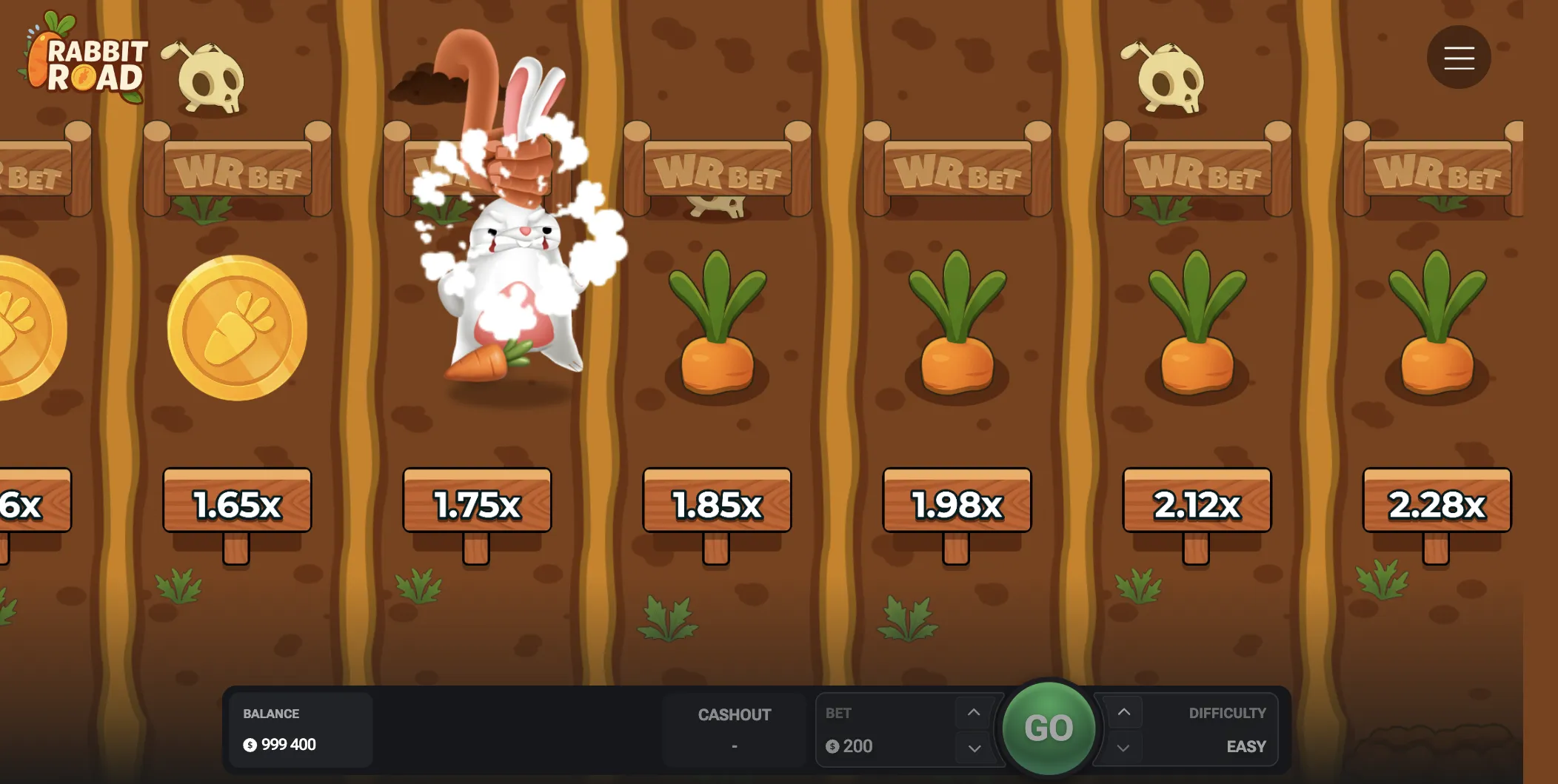
The Farmer event — the termination point of each Rabbit Road round — is generated by the server-side RNG and sealed as a cryptographic hash value before the round's first step. This is the core implication of the game's Provably Fair certification by iTech Labs and Gaming Associates: the outcome cannot be influenced by player action, timing, or any previous round's result.
The practical consequence for strategy is significant. Analysis of round history, identification of patterns, and attempts to predict ""overdue"" high or low multipliers are methodologically invalid. The gambler's fallacy — the belief that independent random events are correlated — is not a strategic approach. It is a cognitive bias documented extensively in behavioural economics research. Players who observe a series of low-multiplier terminations and conclude that a high multiplier is ""due"" are applying flawed logic to an independent probability distribution.
What strategy legitimately addresses is the player's own behaviour — specifically, how much to risk per round, which difficulty mode to engage, and at what multiplier to execute cash-out. These decisions do not influence the RNG outcome, but they determine how the player's bankroll interacts with the distribution of outcomes over a session.
Difficulty Mode Selection as a Primary Strategic Variable

Difficulty selection is the most consequential pre-session decision. It directly determines the multiplier growth rate, the frequency of early termination events, and the overall volatility profile of a session.
| Mode | Multiplier Range | Termination Frequency | Session Bankroll Req. | Optimal For |
|---|---|---|---|---|
| Easy | 1.01× – 23× | Low — more rounds complete | 20–30× stake | Extended sessions, bankroll preservation |
| Medium | Up to ~200× | Moderate | 15–20× stake | Balanced risk-reward profile |
| Hard | Up to ~10,000× | High | 10–15× stake (strict limits) | Defined high-risk exposure, experienced players |
| Hardcore | Up to 3,608,855× | Very high — most rounds terminate early | Treat each round as independent allocation | Lottery-type exposure, small defined stake |
Easy mode's higher termination threshold supports consistent application of pre-set cash-out targets, making it the most compatible mode for systematic strategy execution. Hardcore mode's extreme variance makes systematic cash-out planning substantially less applicable — the primary decision variable becomes maximum stake allocation per round, not cash-out target.
Cash-Out Strategy Taxonomy: Four Evidence-Based Approaches
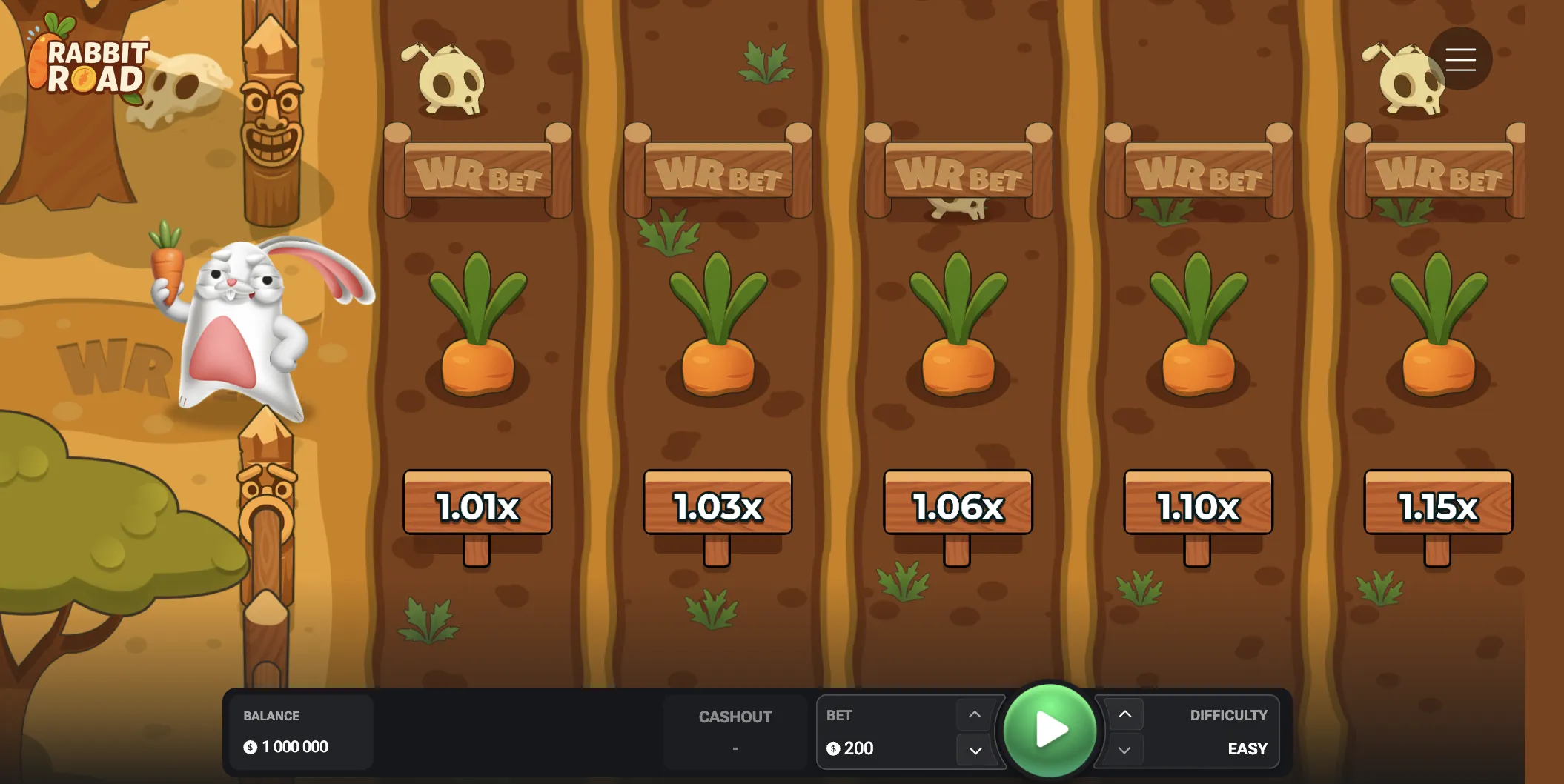
The following four frameworks represent distinct approaches to the cash-out decision. Each carries different implications for variance exposure, session longevity, and bankroll trajectory.
- Fixed Target: A pre-set multiplier (e.g., 2×, 3×, or 5×) is established before the session begins. All rounds use the same target regardless of recent outcomes. This framework eliminates in-round emotional decision-making entirely and produces the most consistent session variance profile. Suitable for Easy and Medium modes.
- Session Profit Lock: Play continues until a pre-defined session profit threshold is reached (e.g., +50% of starting bankroll). On reaching the threshold, the session ends regardless of how many rounds have been played. This prevents positive sessions from degrading through continued play after the target is achieved.
- Progressive Difficulty Target: Begin on Easy with a conservative fixed target. After N consecutive profitable rounds, move to Medium for a defined number of rounds, then return to Easy. Caps Hard or Hardcore exposure to a small defined segment of the session. Requires advance planning and strict adherence to the escalation/reduction triggers.
- Lottery Allocation: Allocate a defined small percentage of the session bankroll (e.g., 5–10%) exclusively to Hardcore rounds, each treated as an independent unit with no expectation of return. Remainder of bankroll is managed on Easy using Fixed Target. Provides controlled exposure to the extreme multiplier range without allowing Hardcore variance to dominate the session.
Bankroll Allocation Protocol: Quantitative Session Management
Stake sizing is the primary lever available to players for controlling session duration and loss exposure. The standard framework applies a per-round stake of 1–3% of session bankroll.
| Session Bankroll | 1% Stake (Conservative) | 3% Stake (Moderate) | Rounds at 1% |
|---|---|---|---|
| A$50 | A$0.50 | A$1.50 | 100 rounds |
| A$100 | A$1.00 | A$3.00 | 100 rounds |
| A$200 | A$2.00 | A$6.00 | 100 rounds |
| A$500 | A$5.00 | A$15.00 | 100 rounds |
The 1–3% framework provides statistical resilience against variance runs. A sequence of 10 consecutive early-termination rounds at 1% stake depletes 10% of the bankroll — a manageable loss that can be recovered within the same session on Easy mode. At 10% per round, the same sequence would eliminate the session bankroll entirely.
Minimum stake in Rabbit Road is A$0.01 per round, subject to operator-imposed floors. All five recommended casino platforms support AUD stakes in this range, with POLi and PayID available for instant deposit processing.
Cognitive Bias Mitigation: The Gambler's Fallacy in Crash Game Context
The gambler's fallacy is the primary cognitive risk in Rabbit Road sessions. Its manifestation in crash game play takes three common forms:
- Escalation after losses: Increasing stake size after a sequence of early terminations, reasoning that a high multiplier round is overdue. Each round is independent. The previous sequence carries no predictive value.
- Extended hold after prior short rounds: Waiting longer than the pre-set cash-out target because recent rounds terminated early. The farmer's appearance in any given round is not influenced by the previous round's outcome.
- Mode escalation post-loss: Moving to Hard or Hardcore after Easy mode underperformance, attempting to recover losses at higher multipliers. This combines gambler's fallacy logic with increased volatility exposure — a compounding risk.
Mitigation requires pre-session commitment to fixed parameters (stake, target, mode) and refusal to revise them in response to in-session outcomes.
Common Strategic Errors: A Diagnostic Checklist
- Beginning sessions on Hardcore without demonstrated Easy and Medium mode proficiency.
- Applying no stake-sizing rule — varying bet amounts by feel rather than a defined percentage of bankroll.
- Setting no profit exit target — continuing to play after achieving a session gain until the gain is depleted.
- Holding beyond the pre-set cash-out target because the current multiplier is ""running well.""
- Playing during emotional distress, fatigue, or following significant losses — all documented impairments to rational decision-making.
- Skipping demo mode practice before transitioning to a new difficulty level.
Demo Environment Utilisation for Strategy Validation
The Rabbit Road demo mode provides an unlimited-rounds, zero-financial-risk environment for strategy validation. Before deploying any of the four frameworks above in a real-money session, players are advised to run a minimum of 20–30 demo rounds per difficulty level to calibrate:
- The average multiplier reached before early termination at each mode.
- The frequency at which a 2×, 3×, or 5× target would have been reachable.
- The session variance profile that should be expected.
Demo access is available at all five recommended platforms (Neospin, Joe Fortune, Wazamba, Gamblezen, SkyCrown) without registration at most. Real-money play should follow demo familiarisation, not replace it.
No strategy guarantees profit. RTP is a long-run theoretical average. Gambling Help Online Australia: 1800 858 858. 18+ only. Gamble responsibly.